

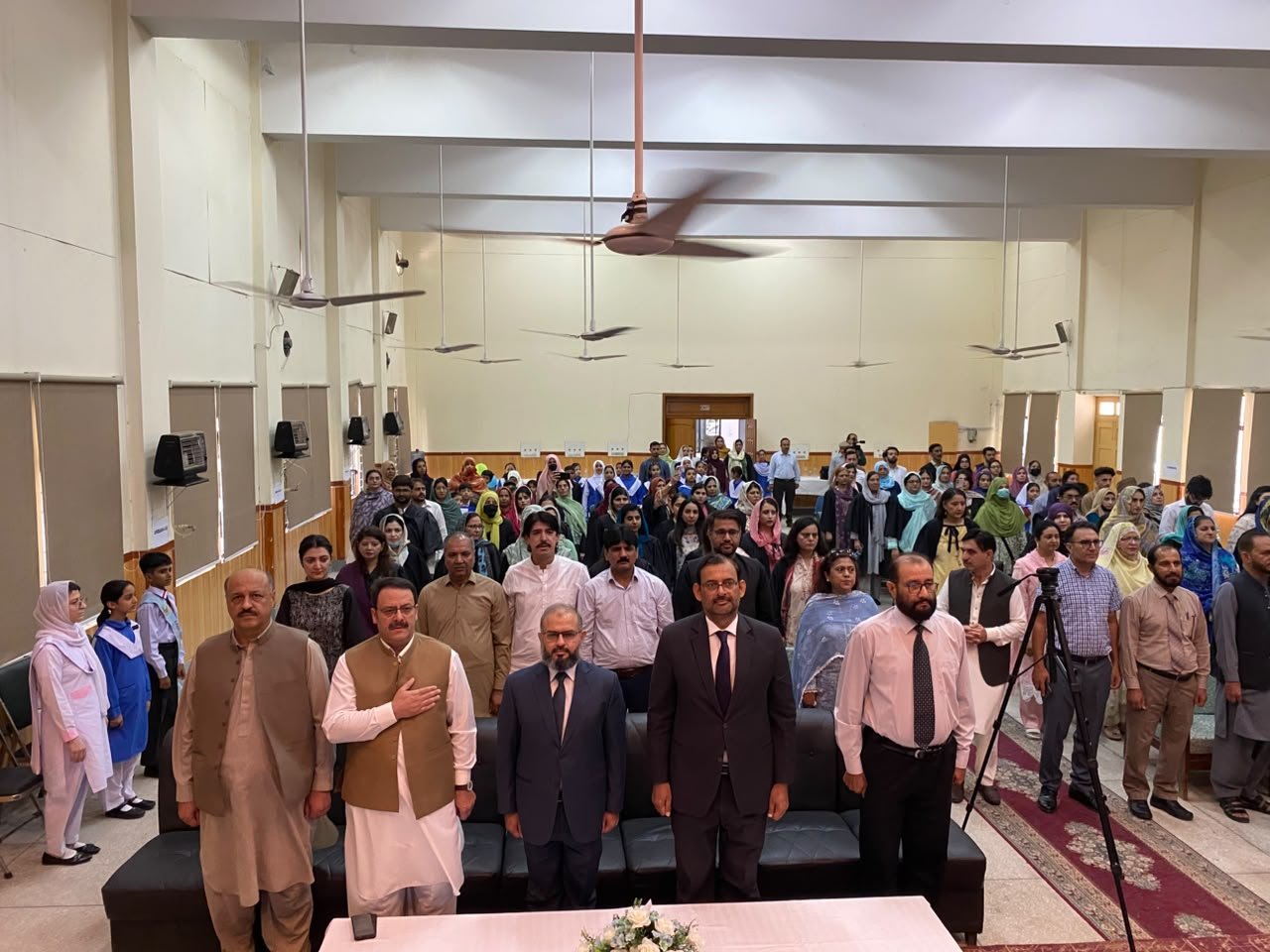
ISLAMABAD, Sept 09: The importance of foundational literacy and numeracy as the basis for meaningful learning, personal development and national progress, educationists said on Tuesday.
At a ceremony organized by Federal Directorate of Education (FDE) to mark the International Literacy Day-2026 with the theme “Strong Foundations, Lifelong Learning,” the speakers said that sustainable development of any country is not possible without enhancing literacy rate.
The event was attended by Additional Secretary, Ministry of Federal Education & Professional Training Hassan Saqlain, Additional Secretary, Director General FDE Javed Iqbal Mirza, students and other officials of the directorate and the ministry.
The guests speakers visited student book-display stalls representing the six ICT education sectors—Urban-I, Urban-II, Sihala, Tarnol, Bharakahu and Nilore.
On the occasion, students showcased books written and illustrated by them, and interacted with the guests about their creative work. Selected titles from the students’ work are to be considered for publication through the National Book Foundation, providing young authors an opportunity to reach a wider readership.
Following the National Anthem and Tilawat, participants viewed a short film documenting the FLN journey, its milestones and experiences from the field. Ms. Riffat Jabeen, Director (Academics), FDE, subsequently briefed the participants on the Foundational Learning and Numeracy programme, highlighting its vision, implementation, progress and achievements. The programme also featured a student tableau and speeches by students on the importance and impact of literacy.
In his address, DG Mirza stated that literacy was far more than the ability to read and write and represented the first doorway to knowledge, confidence and opportunity. He emphasized that the success of education should ultimately be measured not merely by enrolment, but by whether children were learning, understanding, thinking confidently and acquiring skills for life.
He highlighted FDE’s focus on foundational literacy and numeracy, inclusion of out-of-school children, modern learning approaches and teacher capacity-building. Paying tribute to teachers, he described them as central to transforming curriculum into understanding and classrooms into places of discovery. He encouraged students to read widely, ask questions and learn without fear of making mistakes.
The DG Mirza stressed that the collective objective must be to ensure that no child is denied the opportunity to learn and no learner is left behind. He said that a truly literate Pakistan would not simply be one where people could read and write, but one where people could think, understand, create and contribute.
Hassan Saqlain said that literacy was not merely the ability to read and write but the foundation upon which individuals develop knowledge, skills, confidence and opportunities for a better life. He reaffirmed the Government’s commitment to ensuring that no child is left behind and emphasized the need to improve access, quality and relevance of education across the country.
The Additional Secretary further highlighted the Ministry’s focus on out-of-school children, digital learning, skills development and lifelong learning, noting that efforts were being made to strengthen non-formal and distance education, promote digital and EdTech solutions, improve curriculum and assessment, and expand technical and vocational education. He also highlighted initiatives aimed at addressing learning losses and improving educational opportunities for disadvantaged communities.
The Additional Secretary appreciated the leadership of the Director General, FDE, and acknowledged the dedicated efforts of the FDE team in advancing the FLN agenda and translating educational priorities into meaningful interventions for students. He particularly appreciated the commitment and teamwork demonstrated in organizing and implementing initiatives aimed at strengthening foundational learning and creating better learning opportunities for children across the Islamabad Capital Territory.
He emphasized that literacy and education were a shared responsibility, requiring the collective efforts of teachers, parents, communities, civil society and the private sector. He called for the creation of a culture in which every child reads, every learner continues learning and every young person develops skills relevant to the demands of the modern world.

