

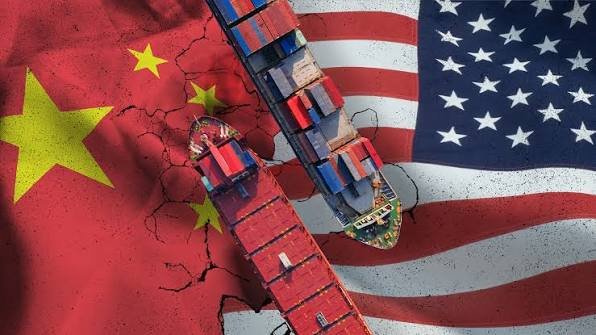
Islamabad, Oct 19,2026 : Renewed economic engagement between China and the United States is strengthening prospects for greater stability in international trade, as the world’s two largest economies move towards structured cooperation and reciprocal tariff reductions that could improve predictability for businesses, investors and global supply chains.
During their September economic and trade consultations, China and the United States advanced work on the China-US Board of Trade and agreed on a reciprocal tariff-reduction framework covering approximately $30 billion worth of goods on each side.
According to China’s Ministry of Commerce, tariffs on around 90% of the products covered by the arrangement would be reduced to most-favoured-nation rates once both countries complete their domestic procedures.
The developments signal efforts to manage economic differences through more structured engagement, potentially reducing uncertainty for international businesses while reshaping competitive conditions for countries maintaining commercial relationships with both economies.
Dr Aadil Nakhoda, Chair of the Economic Advisory Group and Assistant Professor at the Institute of Business Administration, Karachi, told Wealth Pakistan that stronger China-US economic engagement could help reduce uncertainty affecting global trade and provide greater predictability for developing economies.
He said the developments were particularly important for Pakistan because China remained its largest source of imports, supplying machinery, intermediate goods and raw materials used across domestic industries, while the United States continued to be Pakistan’s largest export market.
Greater stability in trade relations between the two major economies could therefore have implications for Pakistan’s industrial production, export competitiveness and participation in international supply chains.
Nakhoda said the expansion of the China Plus One strategy had encouraged multinational companies to diversify production away from China, creating opportunities for alternative manufacturing locations while reshaping established global supply chains.
However, he noted that Pakistan already maintained strong commercial links with China, supported by a bilateral free trade agreement, which provided a foundation for deeper participation in Chinese production and value chains.
Greater stability in Chinese manufacturing and international trade arrangements could benefit Pakistani industries by improving the predictability of imported inputs and creating opportunities for closer industrial cooperation, he said.
Nakhoda emphasised that Pakistan needed a coherent tariff and industrial strategy to translate improvements in the external trading environment into sustainable economic gains.
“The National Tariff Policy needs to be implemented in full spirit. Rationalisation is critical,” he said.
He added that Pakistan should pursue strategic integration into global value chains while strengthening product-safety requirements and quality standards to meet the expectations of international markets.
The renewed engagement between China and the United States comes against the backdrop of prolonged trade tensions that have influenced investment decisions, manufacturing locations and international supply-chain arrangements.
Tariff differences between major economies have encouraged businesses to reassess sourcing strategies and production locations, creating both opportunities and challenges for countries seeking to attract export-oriented investment.
A more predictable trading relationship could help businesses make longer-term decisions about production, procurement and investment, although the benefits would vary across countries and industries.
Bilal Aftab, Staff Economist at the Pakistan Institute of Development Economics (PIDE), told Wealth Pakistan that greater stability in China-US trade relations could provide developing economies with more predictable global demand, freight conditions and supplies of industrial inputs.
At the same time, more stable supplies and prices of Chinese machinery, yarn and chemicals could benefit Pakistani exporters who depend on imported materials for manufacturing and international competitiveness.
Aftab said these developments could improve business planning and reduce uncertainty for firms operating across international supply chains.
However, he cautioned that closer economic engagement between China and the United States could also create new competitive challenges for third countries.
As tariff differences narrow on selected products, Chinese manufacturers may face less pressure to relocate production simply to secure tariff advantages in the American market.
For countries such as Pakistan, this could reduce some of the opportunities previously created by trade tensions and increase the importance of improving domestic industrial competitiveness.
Aftab said Pakistan would increasingly need to compete on production costs, product quality, regulatory compliance and supply reliability rather than depend on tariff differences between major economies.
He also cautioned against assuming that the current easing of China-US trade tensions would produce permanent stability.
The Kuala Lumpur economic and trade arrangement, he noted, had only been extended to January 10, 2027, suggesting that businesses and policymakers should remain prepared for possible changes in trade conditions.
Aftab said Pakistan should therefore plan for managed volatility in China-US economic relations rather than assume that the recent improvement would eliminate future uncertainty.
He stressed that maintaining access to the American market required greater attention to supply-chain traceability, rules-of-origin documentation and compliance with international trade requirements.
These considerations were particularly important for Pakistan’s textile sector, which relies heavily on imported inputs while serving international markets.
Aftab suggested that Pakistan could also explore preferential textile treatment linked to purchases of American cotton, potentially creating opportunities for mutually beneficial trade arrangements.
At the same time, he emphasised the importance of making better use of Pakistan’s existing free trade agreement with China.
He said Pakistan should move beyond traditional export categories and explore opportunities in processed food, higher-value agricultural products and manufactured goods that could find greater demand in the Chinese market.
Aftab also called for Chinese investment in Pakistan’s special economic zones, particularly projects that generated domestic value addition and produced exports capable of meeting international rules-of-origin requirements.
Such investment could help strengthen local manufacturing capabilities, develop supplier networks and improve Pakistan’s participation in regional and global production systems.
He identified engineering goods, technical textiles, surgical products, processed food, halal products and information technology services as areas where Pakistan could pursue greater export diversification.
The evolving China-US trade relationship also highlights the importance of industrial competitiveness for developing economies seeking to benefit from changes in global investment and sourcing patterns.
While greater cooperation between the two major economies could reduce uncertainty in international markets, it could also intensify competition by changing the incentives that previously encouraged businesses to diversify production towards third countries.
For Pakistan, the challenge would be to combine improved external trading conditions with domestic reforms aimed at reducing production costs, improving infrastructure, strengthening regulatory compliance and supporting higher-value exports.
Both experts said renewed China-US economic engagement could provide a more predictable international trading environment but would not eliminate competitive pressures facing Pakistani industries.
They emphasised that sustainable gains would increasingly depend on stronger domestic industrial capabilities, greater value addition, improved product standards and deeper integration into global value chains.
As China and the United States pursue more structured economic engagement, the resulting improvements in trade predictability could support international business confidence, while countries such as Pakistan would need to strengthen their competitiveness to take full advantage of emerging opportunities.

