

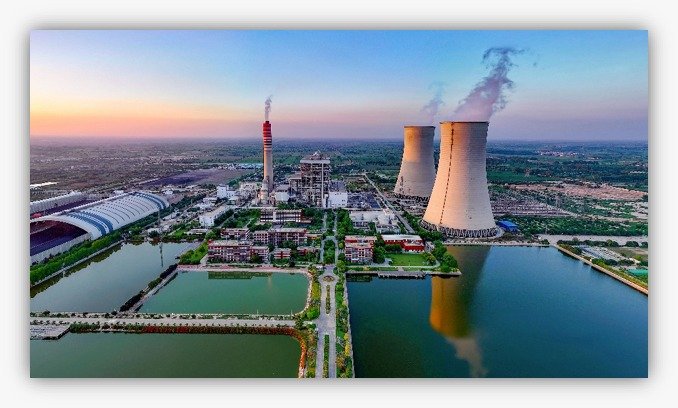
SAHIWAL
Pakistan’s power system is entering a fundamentally different era. Rapid solar growth, particularly in rooftop installations, is reshaping the national demand curve and forcing the grid to absorb ever-increasing volumes of inverter-based generation.
In this evolving environment, a large conventional power station offers something far less visible than raw electricity: electrical stability. The hidden value of a coal-fired plant lies not only in the megawatts it produces, but in how its massive rotating machinery mechanically supports the grid, making the 1, 320 MW Sahiwal Coal-Fired Power Plant a compelling case study.
Beyond the 1,320 MW Number.
Commissioned in October 2017 as an imported-coal project under the China-Pakistan Economic Corridor (CPEC), Sahiwal operates two 660 MW supercritical units. A synchronous generator is physically locked to the grid through its generator transformer and the high-voltage transmission network. Once synchronized, its massive rotating turbine moves in exact step with the system’s frequency. This physical connection provides inherent stability characteristics that solar photovoltaic plants, which connect through digital power electronics, do not naturally possess.
The first critical asset is inertia. When electricity generation and consumer demand suddenly diverge, system frequency begins to shift rapidly. The physical weight and momentum of rotating synchronous machines resist these sudden changes in speed, buying critical seconds for automated governors and control systems to respond. While modern smart inverters can provide synthetic grid support, it must be carefully engineered, configured, and coordinated.
Frequency and Voltage: The Invisible Services.
Pakistan’s national grid operates at a target frequency of 50 Hz. If demand exceeds generation, frequency drops; if generation exceeds demand, it spikes. Maintaining this balance must be continuous and precise. Under Grid Code 2023, generating units are required to provide primary frequency control, automatic governor response, secondary control, Automatic Generation Control integration, dynamic voltage regulation, and reactive power support.
The second hidden asset is reactive power. While reactive power is not what end-user appliances consume, it is essential for maintaining transmission line voltage across long distances. Large synchronous generators can absorb or inject reactive power within their capability limits to hold voltage stable. At sunset, solar output drops rapidly while residential demand remains high, forcing the grid to source energy, operating reserves, and voltage support simultaneously.
The Solar Paradox.
Solar energy reduces national reliance on imported fuels and delivers inexpensive daytime power, which provides an immense economic advantage. However, as the proportion of inverter-based generation rises, the underlying physical behaviour of the electrical grid changes. This shift does not imply that solar is inherently unstable or that coal power is permanently required. Rather, it highlights a broader challenge of system capability: maintaining sufficient technical resources to preserve frequency, voltage, fault response, and reserve capacity as renewables expand.
Why Location Matters.
Two power plants of identical megawatt capacity do not deliver equal value to the grid; a generator situated near a major industrial load centre functions far differently from one located hundreds of kilometres away. Sahiwal is strategically located in Punjab, directly connected to the main transmission network serving one of Pakistan’s highest-density demand regions. Evaluating its economic and operational value strictly through the lens of cost-per-kilowatt-hour overlooks a critical geographic reality: localized grid support is far more valuable where demand is highest.
Value Beyond the Energy Meter.
A conventional thermal plant provides significant value to the transmission system even when operating at reduced output. Its primary ancillary capabilities include remaining continuously synchronized to stabilize frequency, supplying automatic primary and secondary governor response, injecting or absorbing reactive power as needed for voltage regulation, contributing short-circuit strength to support protection systems, providing flexible spinning reserves to respond dynamically to central dispatch, and maintaining fault ride-through during major transmission disturbances.
As inverter-based generation grows, grid stability relies increasingly on power electronic control loops. In a weak power system with low physical inertia, interactions between converter controls, transmission lines, and automated protection gear become erratic and difficult to manage. Large synchronous generators naturally reinforce short-circuit strength and supply the heavy fault current required for protective relays to detect and clear electrical faults safely. While synchronous condensers, grid-forming inverters, and battery energy storage systems can replace some of these functions.
A Reminder from Sahiwal’s Performance.
During its 2026 Annual Capacity Test, Sahiwal’s main metering recorded a net output of 1, 246. 500 MW, while backup metering recorded 1, 247. 137 MW, both exceeding its designated target capacity of 1, 243. 517 MW. After years of continuous commercial service, the plant continues to perform reliably rated above its baseline. This represents a substantial operational capability, not merely a sunk historical investment, and reinforces the importance of viewing such facilities through a holistic power systems lens.
Pakistan does not need to choose between a solar-focused future and a thermal-focused future. The future grid system must be a hybrid ecosystem combining solar PV for low-cost daytime energy production, hydroelectric power for seasonal base capacity, flexibility, and energy storage, wind energy for clean, complementary power generation, battery storage for ultra-fast frequency regulation, flexible thermal generation for dispatchable capacity and physical system strength, and grid-forming inverters alongside upgraded transmission for modern digital stability. Rather, it is whether Pakistan fully understands the specific physical capabilities lost when a conventional generator is decommissioned, and what specific technologies will replace them.
A Different Way to Look at Sahiwal.The next phase of Pakistan’s power sector strategy must look beyond standard generation figures and focus on building a resilient transmission grid that remains rock-solid even as its power originates from fundamentally different technologies. That is precisely where a conventional coal plant, unexpectedly, still has a vital role to play.

