
Staff Reporter
SAHIWAL
On 1 October, the planned maintenance for Unit-2 of the 1320 MW Sahiwal coal-fired power plant went offline for an intensive, month-long program of inspections, repairs, and optimization that is scheduled to finish in the last week of October. This routine but critical outage brings together every specialty on site: Instrumentation & Control (I&C), Electrical, Turbine, Boiler, Metal Testing, HSE, and Operations. The work aims to restore peak reliability, confirm compliance with operational limits, and deliver small but important efficiency gains that sustain the plant’s role as a major base load asset for the grid. The Sahiwal facility, built as two 660 MW supercritical units, has been a cornerstone of the region’s power supply since commissioning and regularly performs planned C-level and major maintenance activities to preserve long-term performance.
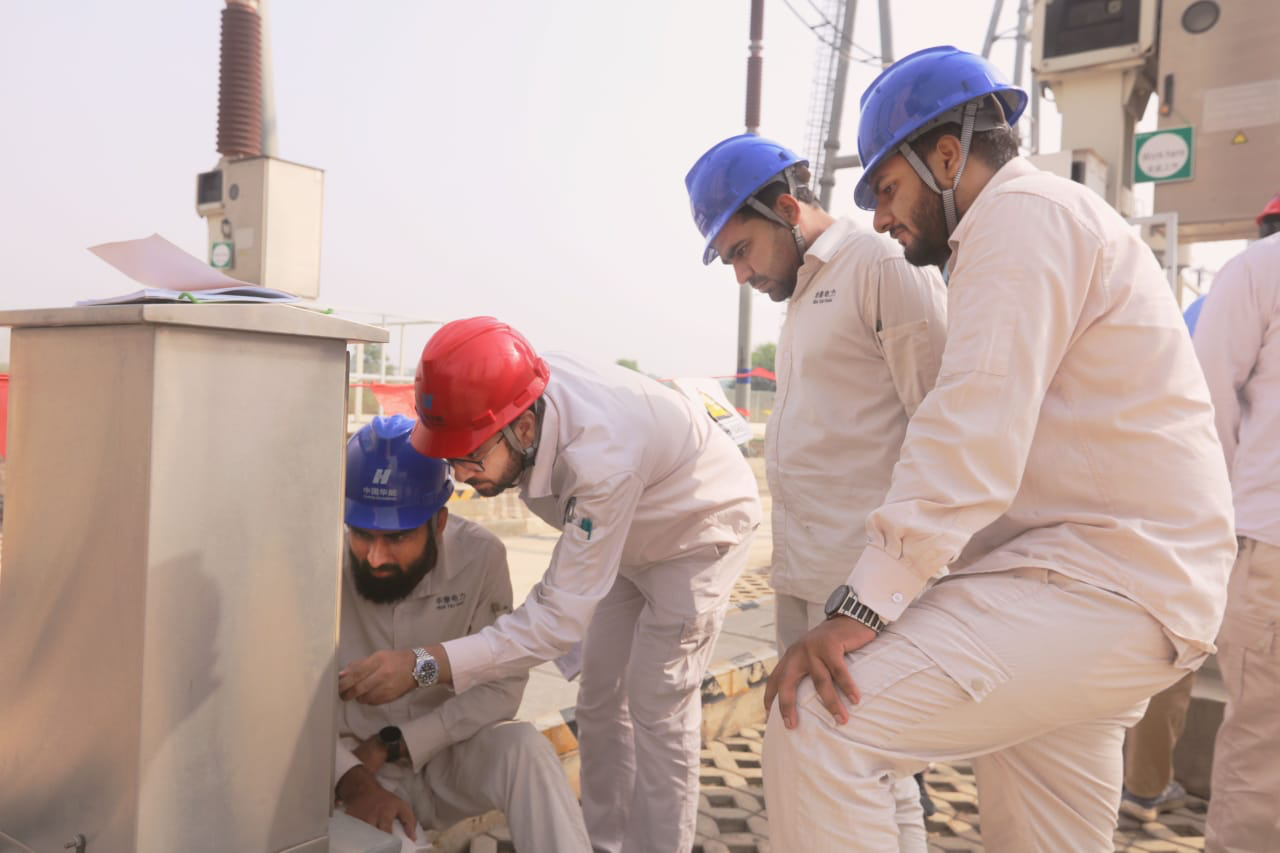
The Instrumentation & Control (I&C) team is front and center during every outage because precision measurement and control are the nervous system of a modern thermal plant. For Unit-2, the I&C class is conducting comprehensive calibration and functional testing of all critical sensors: boiler pressure and temperature transmitters, steam flow and turbine speed sensors, combustion control loops, and the distributed control system (DCS) logic that sequences start, stop, and safety trips. Technicians are removing transmitters for bench calibration, verifying thermowell integrity, exercising solenoid valves, and running factory acceptance-style checks on PLC modules and communication links. Where aging field instruments show drift or intermittent faults, replacements are being fitted and loop tuning carried out so that the unit returns to service with control margins restored.
The Electrical class is performing parallel work that ranges from low-voltage distribution boards up to the generator excitation and main step-up transformer systems. On the electrical side, crews are testing protective relays, exercising breaker mechanisms, cleaning and re-tightening busbar connections, insulation resistance testing of stator windings, and verifying condition-based protections such as differential and rotor earth fault relays. Generator offline tests, including insulation polarization index, surge comparison, and winding resistance, are paired with rotor and stator inspections. Any hotspots discovered during thermography in the weeks before shutdown are getting close inspection and, where required, corrective action. Switchyard and auxiliary power distribution systems are being serviced, earthing systems checked, and control power redundancy verified so that the plant’s electrical backbone is robust at restart.
Turbine class tasks are among the most delicate and consequential during Unit-2’s outage. Turbine specialists have disassembled selected turbine stages and bearings to check for wear, fretting, shaft alignment, and coupling integrity. Bearing clearances are verified, lubrication systems flushed, and filters replaced. Shaft journals are inspected, and thrust bearing behavior analyzed to ensure axial load control is uncompromised. Where vibration surveys flagged marginal trends during operation, dynamic balancing and blade inspections are being performed. Turbine control valve maintenance, including reconditioning valves, replacing packing, and re-setting actuator linkages, is restoring the precise steam admission control needed for efficient operation.
Boiler class activities are extensive because the boiler is the heart of combustion and heat transfer. The Unit-2 boiler is receiving a meticulous inspection of superheater and reheater tubes, economizer elements, soot blower functionality, and the furnace lining. Tube thinning surveys and dimensional checks are carried out where inspection ports are opened, and planning teams are ready to replace tubes if metal-loss measurements exceed thresholds. Coal feed, pulverizer, and primary air system checks are ensuring fuel is delivered and atomized correctly.
Metal Testing class work underpins the whole maintenance program by turning physical inspections into certified, engineering-grade decisions. Metal-testing engineers perform nondestructive testing (NDT) such as ultrasonic thickness gauging, dye-penetrant inspections, magnetic particle testing, and radiography where access allows. Samples are taken where weld integrity or material degradation is suspected, and metallurgical analysis is used to confirm root cause when anomalies are found. Hardness tests, microstructure examinations, and chemical composition checks inform whether a component is repairable, requires reinforcement, or must be replaced.
Health, Safety & Environment (HSE) is the silent organizer and constant guardian during the outage. HSE specialists ran pre-shutdown hazard assessments and issued the work permits (PTWs), ensured confined space entry procedures were strictly followed, and that hot-work permits and lockout-tagout regimes were enforced for every team. The HSE department also coordinates respiratory protection where dust or boiler deposition work is ongoing, manages fall-protection for elevated scaffolding around the boiler and turbine casings, and runs daily toolbox talks so every worker understands the hazards for that shift.
Operations department personnel provide the operational continuity that allows maintenance to proceed safely and efficiently. Operators and shift engineers coordinate the safe cooldown and isolation of systems before hands-on work begins, manage plant auxiliaries during the outage, and plan the stepwise restoration at the end of the maintenance window. Operations oversees spares management, coordinates contractor access, and keeps the control room interface aligned with maintenance schedules so there is a one-voice approach to any unexpected findings.
Finally, it is worth noting that well-executed maintenance is not just a technical achievement; it is a demonstration of teamwork and institutional discipline. Each class, whether I&C, Electrical, Turbine, Boiler, Metal Testing, HSE, or Operations, brings a specialized discipline to a tightly coupled system. The success of this month’s Unit-2 program will depend on precise execution, honest inspection, and good judgment about repairs versus replacements. If past campaigns are any guide, the plant’s integrated approach and experienced crews will return Unit-2 to the grid with renewed reliability and performance.
As the last week of October approaches, attention will shift to final commissioning checks and performance trials. For the grid, a timely restart matters; for the plant, the outage is an investment that preserves the long-term value of a major asset; and for the team on the ground, it is a concentrated test of professionalism and care. The coming days will show how well the careful planning and cross-class collaboration pay off when steam, rotation, and current all come back into alignment.