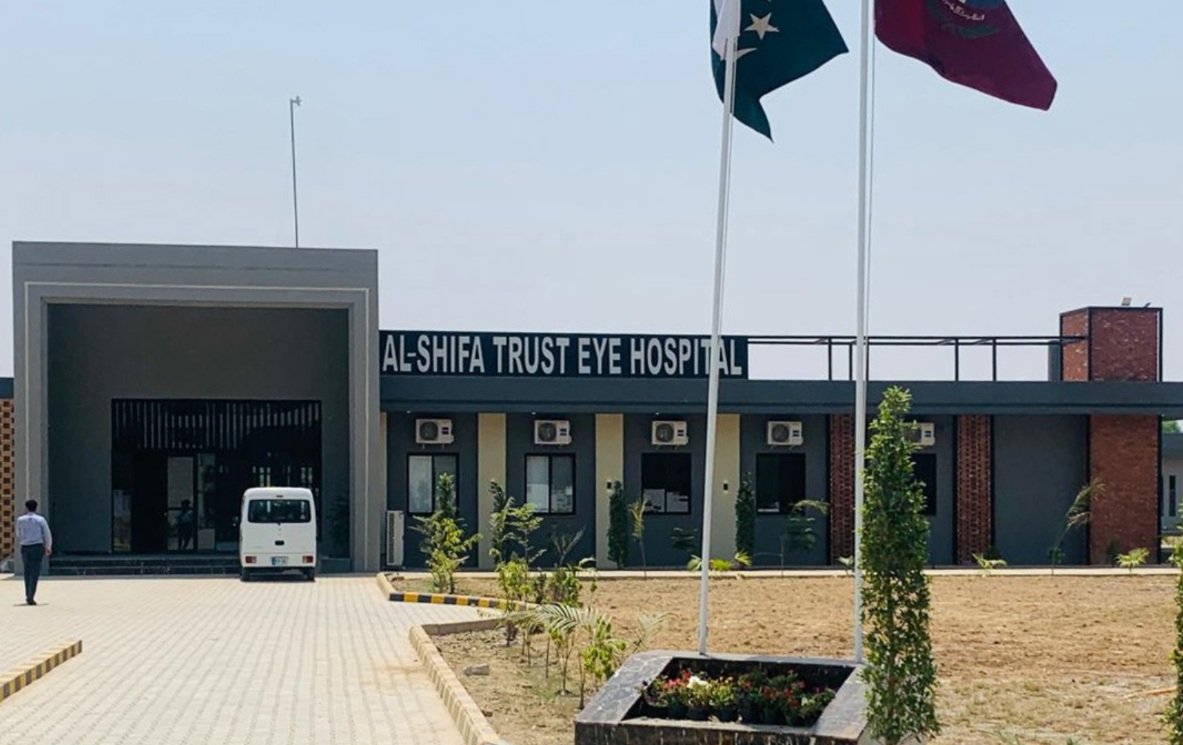
RAWALPINDI, April 28 (ABC): Al-Shifa Trust has started services at its new eye hospital in Haveli Lakha, Okara, ahead of the formal inauguration on May 4. The facility brings specialist eye care closer to residents of five districts in South Punjab.
Hospital to serve five districts
The hospital will serve patients from Haveli Lakha, Depalpur, Pakpatan, Sahiwal, and Bahawalnagar. These areas have long faced limited access to specialised eye treatment.
The trust built the facility on two acres of donated land. The total project cost stands at Rs162 million. This includes Rs122 million for construction and Rs40 million for medical equipment. Donors funded the project and helped expand access to quality healthcare in underserved communities.
Capacity and regional need
The hospital can treat up to 250 outdoor and indoor patients daily. This will strengthen healthcare delivery in the region.
South Punjab carries a high burden of eye disease. More than 1.8 million people live with blindness. Around 85 percent of these cases are avoidable. Nearly half result from cataracts, which doctors can treat through routine surgery. However, rural populations still face shortages of trained staff and modern surgical facilities.
Progress and remaining challenges
Pakistan has reduced its blindness rate over the years. The rate fell from 1.78 percent in 1990 to about 0.5 percent today. Expanded cataract surgeries and early diagnosis supported this progress.
Despite these gains, challenges remain. Treatment costs continue to rise, and facilities remain limited in rural areas. For daily-wage earners in Okara and Sahiwal, the new hospital reduces the need to travel to Lahore or Multan. This cuts both travel time and expenses.
Expanding national network
With the Haveli Lakha facility, Al-Shifa Trust now runs seven hospitals across Pakistan. These include centres in Rawalpindi, Sukkur, Kohat, Muzaffarabad, Chakwal, and Gilgit.
The trust has also organised more than 15,000 screening and surgical camps in remote areas. These efforts have improved outreach and early detection of eye diseases.
Focus on preventive care
The organisation continues to prioritise preventive healthcare. Last year, it screened more than 175,000 schoolchildren through over 550 free eye camps.
In the coming year, the trust aims to reach more than two million patients. It also plans to perform 120,000 surgeries. Around 80 to 90 percent of patients will receive free treatment, ensuring wider access to essential eye care services.