

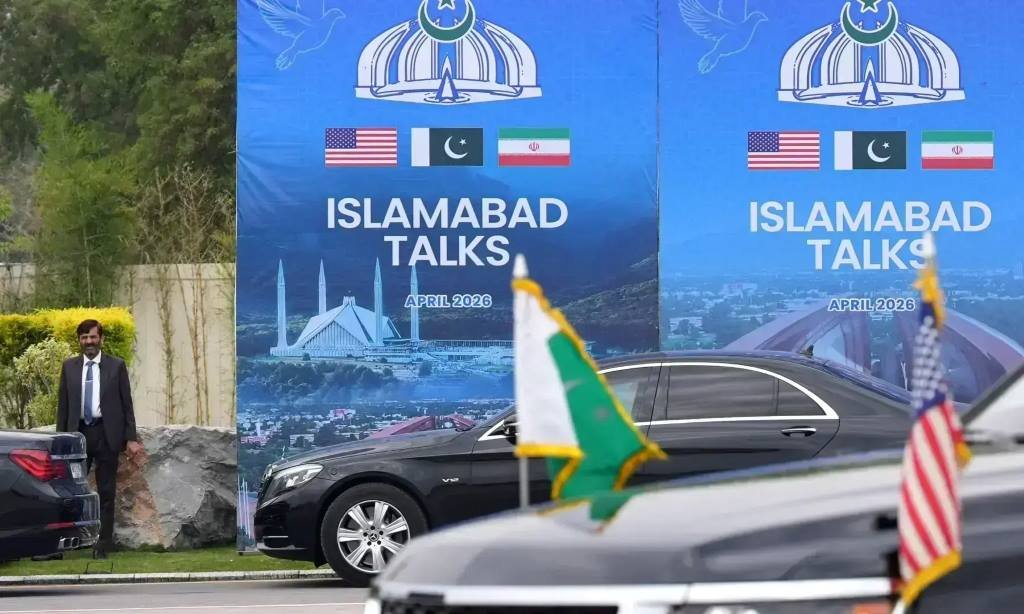
WASHINGTON, July 05(ABC): Islamabad is emerging as the leading venue for the next round of technical negotiations between the United States and Iran.
The resumption of the talks is part of ongoing efforts to keep the diplomatic process on track and resolve longstanding disputes between Washington and Tehran.
“There are two possible venues for the technical talks — Islamabad and the Burgenstock resort in Switzerland,” one diplomatic source said. “Islamabad, however, is the more likely option.”
The technical talks are expected to take place on July 11, although a final decision on the venue has yet to be announced.
According to diplomatic sources, the negotiations will focus on Iran’s nuclear programme, sanctions relief and Iranian assets frozen abroad. The discussions are also expected to address regional security issues, including efforts to preserve stability in the Strait of Hormuz and maintain the recently agreed ceasefire in Lebanon.
The July 11 meeting is intended to advance the framework established under the Islamabad Memorandum of Understanding, signed two weeks ago, which gave both sides 60 days to negotiate a comprehensive agreement on Iran’s nuclear programme and related issues.
The talks were temporarily delayed because of the multi-day state funeral ceremonies for Iran’s late Supreme Leader Ayatollah Ali Khamenei. Iranian officials have indicated that the composition of Tehran’s delegation will be announced after the funeral ceremonies conclude.
The latest diplomatic efforts follow indirect technical discussions held in Doha earlier this week. US President Donald Trump described those talks as “very good”, while Iranian officials said the two sides had reached an understanding on the partial release of billions of dollars in frozen Iranian assets. US officials, however, reportedly disputed that any such agreement had been reached.
Diplomatic sources said mediators from Qatar and Pakistan continued to facilitate indirect contacts during the pause in negotiations, with discussions focusing on ensuring freedom of navigation through the Strait of Hormuz and preserving the 60-day ceasefire agreed after June negotiations in Switzerland.
The most recent high-level negotiations were held at Switzerland’s Burgenstock resort and were mediated by Qatar and Pakistan. Those talks produced what negotiators described as a roadmap for reaching a broader agreement covering Iran’s nuclear programme, sanctions relief, maritime security and regional de-escalation.
Diplomatic sources said marathon negotiating sessions addressed nuclear restrictions, sanctions relief, security in the Strait of Hormuz and the Lebanon ceasefire. Although negotiators reported progress, they cautioned that the process remained fragile amid continuing tensions between Washington and Tehran.
Officials familiar with the negotiations said the next round of high-level direct talks is expected to take place in Doha during the third week of July, after technical teams complete work on the details of a possible agreement.
US, Iran trade fresh barbs
Meanwhile, Washington and Tehran continued to exchange sharp verbal barbs during Khamenei’s funeral.
Speaking at an Independence Day event at Mount Rushmore, President Trump mocked the funeral ceremony, saying Washington had “given Iran a week off for a funeral because we’re nice”.
“We beat Venezuela in one day, and we knocked the hell out of Iran. They are dying to settle; they want to settle so badly,” he said during a speech marking the start of celebrations for the 250th anniversary of the US, Al Jazeera reported on Saturday.
“We gave them a week off for a funeral because we are nice,” he added. He also claimed that Tehran was “dying to settle”.
Meanwhile, Iran’s foreign ministry said Tehran would seek justice against the US and Israel, adding that this would “remain an enduring cause”, according to Al Jazeera.
It also said the presence of high-level delegations from across the region and around the world at the farewell ceremonies for the late supreme leader was a clear indication of his stature and the greatness of the Iranian people.
Meanwhile, the commander of Iran’s Islamic Revolution Guards Corps (IRGC) Navy said that “divine retribution” against the US and Israel was “not far off”, according to the state-run IRNA news agency.
In a message, IRGC Navy chief Rear Admiral Ali Ozmaei said he and his personnel “pledge to God that, by following the ideals of the martyrs, we will continue the path of the martyred leader of the Ummah with strength and steadfastness”.
“We have firm hope that divine retribution against the terrorist America and the illegitimate Zionist regime [Israel] is not far off,” he added.
‘Extra-regional powers’
Iran’s Deputy Foreign Minister Kazem Gharibabadi issued a strong warning against any military activity by “extra-regional powers” in the Strait of Hormuz, emphasising that Tehran would hold those responsible for creating tensions “fully accountable” for their actions.
“The Strait of Hormuz is not a theatre for the military display of extra-regional powers,” Gharibabadi said in a post on X.
“Iran, as the responsible power and guarantor of the Strait’s security, warns against any military movement in this waterway with the utmost seriousness,” he added.
In another development, Iranian parliament speaker and chief negotiator Mohammad Bagher Ghalibaf hit back at US President Donald Trump’s recent remarks on Iran’s food situation.
In an interview with CNBC, Trump repeated his claim that Iran would buy agricultural products from the US as part of any future peace deal, a claim Tehran has denied.
In a post on X, Ghalibaf responded by dismissing the US president’s assertions. “Imagine having 40-something million of your own citizens on food stamps and calling another nation hungry,” he said.
Ghalibaf further said the US must recognise that “realities have changed” following the Israeli-US war against Iran during a meeting with Uzbekistan’s parliamentary speaker, according to Al Jazeera.
He said “conditions have improved compared to the past” and that post-war developments had forced Washington to accept “existing realities”.
“In such an environment, trade relations can be expanded further, and we hope that the groundwork for lifting sanctions will also be prepared,” he added.
Ghalibaf further said that with the joint management of the Persian Gulf and the Strait of Hormuz by Iran and Oman, and a reduction in “American mischief” in the region, better prospects would emerge for transit cooperation.

